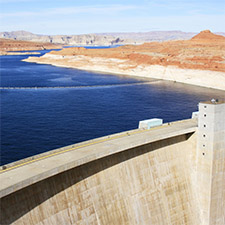
Balancing Severe Decision Conflicts under Climate Extremes in Water Resource Management
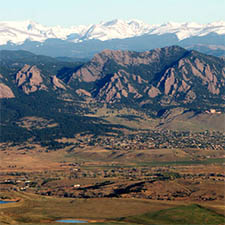 Over the past several years there have been increasing calls for decision support tools in the area of climate and acknowledgement that changing extremes add to an already challenging decision environment for water managers. Recurring droughts, flood events, and concerns over extreme events in the future have created a strong interest among water managers in the Front Range of Colorado about how to plan in the face of these extremes. Traditional methods of identifying alternatives for water supply management may not fully capture the range of existing preferred alternatives, meaning that utilities may miss some of the solutions that appropriately balance among tradeoffs. Read more ... Over the past several years there have been increasing calls for decision support tools in the area of climate and acknowledgement that changing extremes add to an already challenging decision environment for water managers. Recurring droughts, flood events, and concerns over extreme events in the future have created a strong interest among water managers in the Front Range of Colorado about how to plan in the face of these extremes. Traditional methods of identifying alternatives for water supply management may not fully capture the range of existing preferred alternatives, meaning that utilities may miss some of the solutions that appropriately balance among tradeoffs. Read more ...
|
Building a Network of VAR (Vulnerability, Adaptation, Resilience) Researchers in the Intermountain West
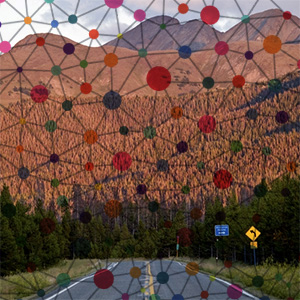 The intermountain west is home to many researchers who study aspects of climate vulnerability, adaptation and resilience. Most of us attend national conferences such as AAG, AGU, AMS and the like, and many of us work within specialized networks such as fire, water, forest ecosystems, and so on. However, building resilience to climate change is a goal that requires bringing together different perspectives and sectors in order to ensure that system linkages are considered at the regional scale. This project would be the starting point for building a sustained network for resilience that links researchers and practitioners engaged in knowledge-action research across the region. Our goal is to make visible and develop the researcher network that we would then build on in future years to create a more complete practitioner/researcher network for engaged research. Read more ... The intermountain west is home to many researchers who study aspects of climate vulnerability, adaptation and resilience. Most of us attend national conferences such as AAG, AGU, AMS and the like, and many of us work within specialized networks such as fire, water, forest ecosystems, and so on. However, building resilience to climate change is a goal that requires bringing together different perspectives and sectors in order to ensure that system linkages are considered at the regional scale. This project would be the starting point for building a sustained network for resilience that links researchers and practitioners engaged in knowledge-action research across the region. Our goal is to make visible and develop the researcher network that we would then build on in future years to create a more complete practitioner/researcher network for engaged research. Read more ...
|
Interactions of Drought and Climate Adaptation (IDCA) for Urban Water
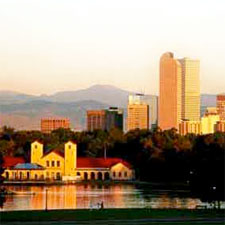 This project, funded by the NOAA Sectoral Applications Research Program (SARP), examined how drought policies interact with both short-term drought and long-term climate change. It asked whether adjustment today or in the past leads to more resilient systems across climate time scales. The project focused on urban water systems across the US and how they responded to drought. Researchers then used a looked for patterns in those responses to understand how such drought policies prepare cities for the adaptation challenge of the future. Read more ... This project, funded by the NOAA Sectoral Applications Research Program (SARP), examined how drought policies interact with both short-term drought and long-term climate change. It asked whether adjustment today or in the past leads to more resilient systems across climate time scales. The project focused on urban water systems across the US and how they responded to drought. Researchers then used a looked for patterns in those responses to understand how such drought policies prepare cities for the adaptation challenge of the future. Read more ...
|
Knowledge, Power and the Coproduction of Climate Information for Adaptation to Climate Change in Tanzania
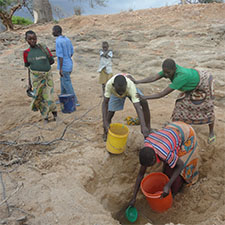 Lisa Dilling, Meaghan Daly, Mara Goldman and Eric Lovell are conducting a project that aims to improve understanding of processes to effectively link climate information and adaptation at national and local scales in Tanzania. The approach is to explicitly recognize and examine the ways in which the varying epistemological traditions and relations of power among vulnerable communities, disaster management professionals, and climate experts influence the perceived value of climate information for improved early warning and climate adaptation. Read more ... Lisa Dilling, Meaghan Daly, Mara Goldman and Eric Lovell are conducting a project that aims to improve understanding of processes to effectively link climate information and adaptation at national and local scales in Tanzania. The approach is to explicitly recognize and examine the ways in which the varying epistemological traditions and relations of power among vulnerable communities, disaster management professionals, and climate experts influence the perceived value of climate information for improved early warning and climate adaptation. Read more ...
|