
 |
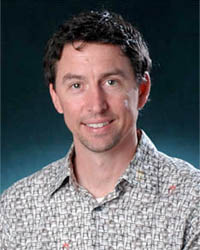
Maxwell BoykoffCenter Director Center for Science and Technology Policy Research Tel: 303-735-0451 |
Max is a Professor in the Environmental Studies department (where he now serves as Chair) and is Adjunct faculty in the Department of Geography. Max is also a Fellow in the Cooperative Institute for Research in Environmental Sciences at the University of Colorado Boulder. He holds a Ph.D. in Environmental Studies from the University of California-Santa Cruz and Bachelor of Sciences in Psychology from The Ohio State University.
Max has ongoing interests in cultural politics and environmental governance, science and environmental communications, science-policy interactions, political economy and the environment, and climate adaptation He has experience working in North America, Central America, South Asia, Oceania and Europe, and is a co-author and editor of seven books and edited volumes, along with over fifty articles and book chapters.
Max’s research and creative work has developed primarily in two arenas:
- cultural politics of science, climate change and environmental issues = this refers to ways that attitudes, intentions, beliefs and behaviors of individuals and groups shape (and are shaped by) the perceived spectrum of possible action in the context of science-policy, climate change and environmental issues.
- transformations of carbon-based economies and societies (with emphasis on the interface of science and practical action) = this refers to decarbonization politics, policies and decision-making, with particular interest in how these activities find meaning in people’s everyday lives, as well as how they, in turn, feed back into science-policy decision-making.
Max integrates these research and creative works with ongoing commitments to mentorship, teaching and service. He supervises postdocs, graduate and undergraduate students through the International Collective on Environment, Culture and Politics. See Max’s ‘current/former students’ page for more about their research and current positions.
Max was born and raised in Madison, Wisconsin. He is proud to be a Badger.
A Note for Prospective Graduate Students
If you are considering applying to the Environmental Studies Program at the University of Colorado and would like to work with me, please send an email with these three attachments:
- A C.V.
- A description of why you’d like to enroll in the Environmental Studies program, and work in my research group
- A statement about how your research interests may relate to one of these two research projects (where I am currently interested in advising students):
Recent Publications
Sklair, L. and M. Boykoff, 2020. Mass Media Representations of Anthromes. Encyclopedia of the World's Biomes: Reference Module in Earth Systems and Environmental Sciences, Eds. M. Goldstein and D. DellaSala, Elsevier.
Boykoff, M., 2020. Digital cultures and climate change: 'Here and now'. Journal of Environmental Media 1 (1) 21-25, doi: 10.1386/jem_00003_1, January.
Boykoff, M. and O. Pearman, 2019. Now or Never: How Media Coverage of the IPCC Special Report on 1.5C Shaped Climate-Action Deadlines. One Earth 1 (3) , doi: 10.1016/j.oneear.2019.10.026, November 22.
Watts, N., M. Amann, N. Arnell, S. Ayeb-Karlsson, K. Belesova, M. Boykoff, P. Byass, W. Cai, D. Campbell-Lendrum, S. Capstick, J. Chambers, C. Dalin, M. Daly, N. Dasandi, M. Davies, P. Drummond, R. Dubrow, et al., 2019. The 2019 report of The Lancet Countdown on health and climate change: Ensuring that the health of a child born today is not defined by a changing climate. The Lancet , doi: 10.1016/S0140-6736(19)32596-6, November 13.
Timm, K.M., E.W. Maibach, M. Boykoff, T.A. Myers, and M.A. Broeckelman-Post, 2019. The prevalence and rationale for presenting an opposing viewpoint in climate change reporting: Findings from a United States national survey of TV weathercasters. Weather, Climate, and Society , doi: 10.1175/WCAS-D-19-0063.1.
Boykoff, M., 2019. Leave 'em laughing instead of crying: Climate humor can break down barriers and find common ground. The Conversation, September 30.
McNatt, M.B., M.K. Goodman and M.T. Boykoff, 2019. Anthropocene communications: Cultural politics and media representations of climate change. The Routledge Companion to Environmental Planning , Ed. S. Davoudi, R. Cowell, I. White, H. Blanco209-219, Routledge.
Boykoff, M., 2019. The kids are all right. Adults are the climate change problem. Daily Camera, Published September 5 2019.
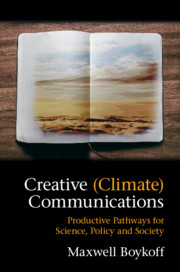
Boykoff, M., 2019. Creative (Climate) Communications: Productive Pathways for Science, Policy and Society. Cambridge University Press, doi: 10.1017/9781108164047, Published July.
Boykoff, M. and J. Farrell, 2019. Climate change countermovement organizations and media attention in the United States.Climate Change Denial and Public Relations , Ed. N. Almiro and J. Xifra, pp. 121-139, Routledge, Published July 8.
Osnes, B., M. Boykoff, and P. Chandler, 2019. Good-natured comedy to enrich climate communication. Comedy Studies , doi: 10.1080/2040610X.2019.1623513.
Wibeck, V., B-O. Linner, M. Alves, T. Asplund, A. Bohman, M.T. Boykoff, P.M. Feetham, Y. Huang, J. Nascimento, J. Rich, C.Y. Rocha, F. Vaccarino, and S. Xian, 2019. Stories of Transformation: A Cross-Country Focus Group Study on Sustainable Development and Societal Change. Sustainability 11 (8), doi: 10.3390/su11082427.
Boykoff, M. and D. Oonk, 2018. Evaluating the perils and promises of academic climate advocacy. Climatic Change, doi: 10.1007/s10584-018-2339-3.
Watts, N., M. Amann, N. Arnell, S. Ayeb-Karlsson, K. Belesova, H. Berry, T. Bouley, M. Boykoff, et al., 2018. The 2018 report of the Lancet Countdown on health and climate change: Shaping the health of nations for centuries to come. The Lancet, doi: 10.1016/S0140-6736(18)32594-7.
Ghosh, A. and M. Boykoff, 2018. Framing sustainability and climate change: Interrogating discourses in vernacular and English-language media in Sundarbans, India. Geoforum, doi: 10.1016/j.geoforum.2018.11.014.
Boykoff, M., 2018. Burden sharing at the water's edge (Book Review of 'Rising: Dispatches from the New American Shore' by Elizabeth Rush). Nature Climate Change 8, doi: 10.1038/s41558-018-0288-5.
Boykoff, M. and B. Osnes, 2018. A Laughing Matter? Confronting climate change through humor. Political Geography, doi: 10.1016/j.polgeo.2018.09.006.
Boykoff, M.T., B. Osnes, and R. Safran, 2018. Contando Historias Sobre la Ciencia del Cambio Climático: Dentro del Invernadero. La Comunicacion Audiovisual de la Ciencia, Ed. G. Orozco, M. Frances, and B. Leon, 137-155, Editorial Sintesis.
León, B., M. Boykoff, J. Huda, and C. Rodrigo, 2018. Framing in Climate Change Videos. Communicating Science and Technology Through Online Video: Researching a New Media Phenomenon , Ed. B. León and M. Bourk107-119, Routledge.
View all of Max's publications



